Update for 2026
In May 2025 I wrote about the Starch and Sucrose Reduced Diet (SSRD), a newer dietary approach for irritable bowel syndrome (IBS). Since then, more has been published, including a commentary in The Lancet Gastroenterology & Hepatology. This update looks at what the research shows so far, how much research there actually is, and why it is difficult to know which part of the diet is helping.
What is the SSRD?
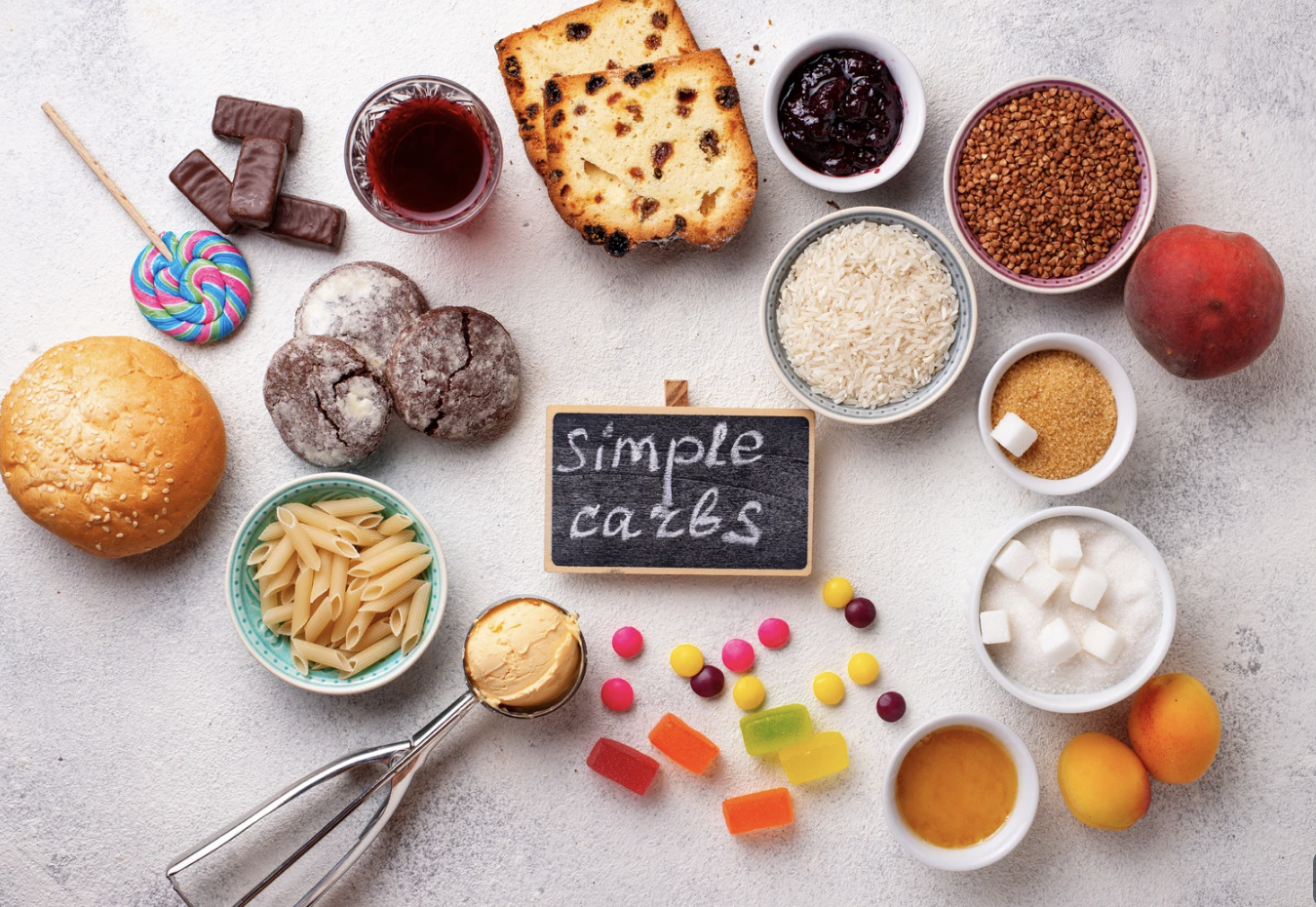
The SSRD cuts down on starchy foods and added sugar (sucrose). This means less bread, white pasta and processed rice, fewer sweets, sweetened dairy products and processed foods, and more meat, fish, eggs, natural dairy products, nuts, seeds, fruit and vegetables that are low in starch [1,2].
What the research shows
In the first trial, 105 people with IBS followed either the SSRD or their usual diet for four weeks. Around three in four people on the SSRD (74%) felt meaningfully better, compared with one in four (24%) who stayed on their usual diet [2].
A second trial of 155 people compared the SSRD with the low FODMAP diet. After four weeks, both diets worked equally well, with 79% and 78% of people improving [3]. By six months, fewer people were still benefiting (36% and 42%), and the researchers could not show that the SSRD was as effective in the longer term [3].
How much research is there?
Very little so far. Both trials were carried out by the same research team in Sweden, and several published papers report on the same two groups of people [1-4]. In total, only around 160 people have followed the SSRD in a trial. Most were women in their mid-40s, the diets were followed for just four weeks, and participants knew which diet they were on, which can influence how people report their symptoms [2,3].
The only other study, from Spain, included 34 people but had no comparison group, so it cannot show whether the diet itself made the difference. A later follow-up paper was withdrawn by the journal [5,6]. By comparison, a 2025 review found 28 trials of diets for IBS involving 2338 people, most of them testing the low FODMAP diet [7].
What did The Lancet say?
In that 2025 review the SSRD ranked highly, but a commentary in The Lancet Gastroenterology & Hepatology urged caution [8]. It pointed out that the SSRD had been tested in only two trials, and that ranking highly in this type of review does not necessarily mean a diet works better in practice. It also noted that the SSRD trials did not measure changes in FODMAP intake. Overall, it described the SSRD as promising, but early [8].
Is it the SSRD, or something else?
This is a key question. The SSRD shares many features with the low FODMAP diet and the Mediterranean diet, which is often described as "anti-inflammatory".
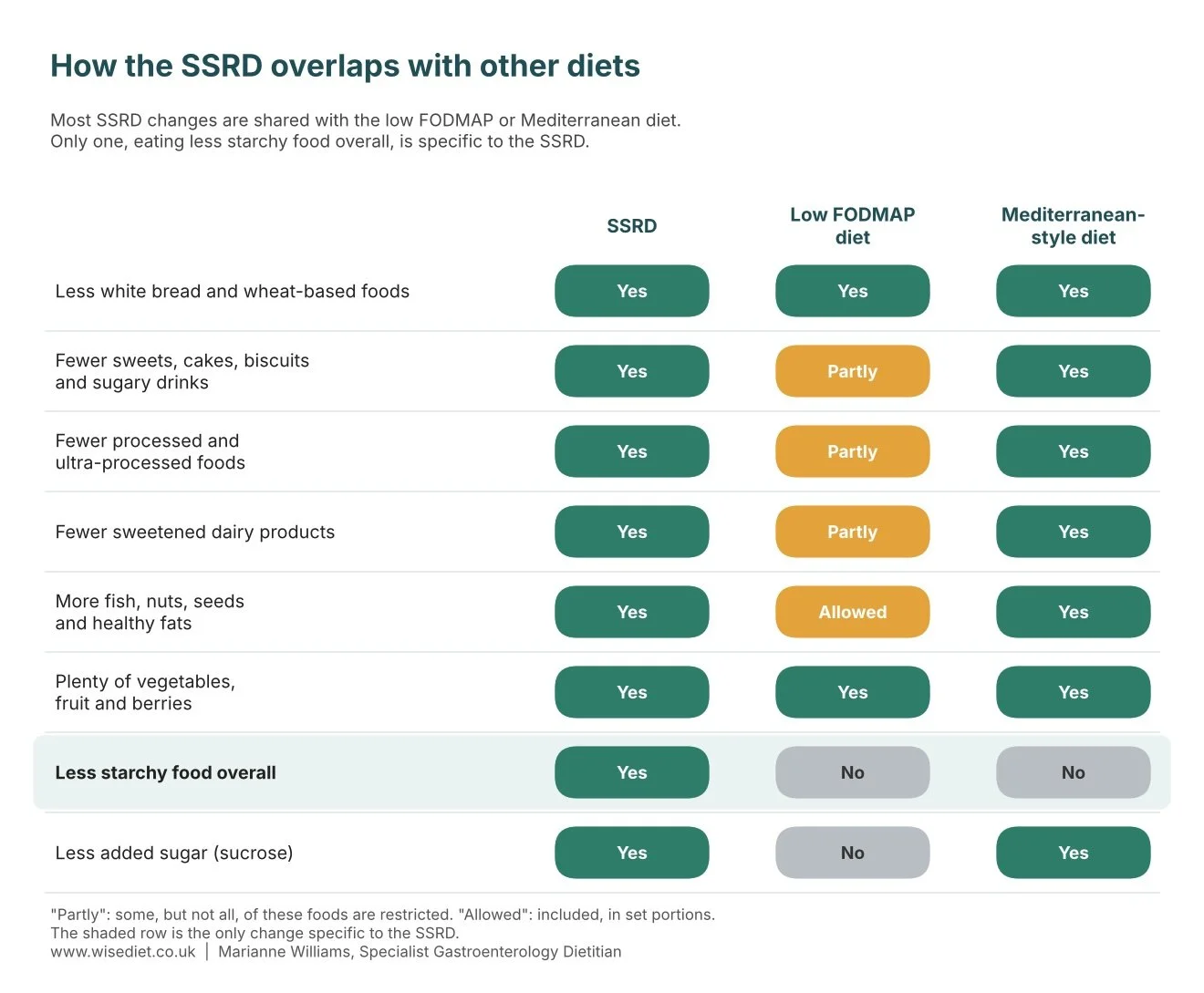
Only one change, eating less starchy food overall, is specific to the SSRD.
Eating less bread and wheat also cuts down on fructans, a common FODMAP trigger. Fewer processed and sugary foods, and more fish, olive oil, nuts and vegetables, are hallmarks of the Mediterranean diet. Weight loss, and simply paying more attention to what you eat, may also help. Notably, the SSRD did not lower markers of inflammation in the blood [2]. In the second trial, both diets reduced carbohydrate intake and weight, and improved symptoms to a similar degree [3,4]. It is therefore difficult to know whether cutting starch and sugar is itself responsible for the benefit.
Is it right for you?
The SSRD is a big change from most people's usual diet, and weight loss is common. It may not suit people who are underweight, have a history of disordered eating, or take insulin or other medicines that lower blood glucose. Any restrictive diet is best followed for a limited time with a dietitian's support.
For now, first-line dietary advice and the low FODMAP diet remain the best-studied options for IBS. The SSRD may be worth discussing with a dietitian if these have not helped, or if it suits your preferences and lifestyle.
If you would like individual advice, you can find out how to enquire on my Appointments page. My free videos on IBS and the low FODMAP diet are also available on this website.
References
1. Nilholm C, Roth B, Ohlsson B. A dietary intervention with reduction of starch and sucrose leads to reduced gastrointestinal and extra-intestinal symptoms in IBS patients. Nutrients 2019;11:1662. doi:10.3390/nu11071662
2. Nilholm C, Larsson E, Sonestedt E, Roth B, Ohlsson B. Assessment of a 4-week starch- and sucrose-reduced diet and its effects on gastrointestinal symptoms and inflammatory parameters among patients with irritable bowel syndrome. Nutrients 2021;13:416. doi:10.3390/nu13020416
3. Roth B, Nseir M, Jeppsson H, D'Amato M, Sundquist K, Ohlsson B. A starch- and sucrose-reduced diet has similar efficiency as low FODMAP in IBS: a randomized non-inferiority study. Nutrients 2024;16:3039. doi:10.3390/nu16173039
4. Roth B, Ohlsson B. Dietary modifications in IBS leads to reduced symptoms, weight, and lipid levels: two randomized clinical trials. Nutrients 2025;17:2966. doi:10.3390/nu17182966
5. Gayoso L, Garcia-Etxebarria K, Arzallus T, et al. The effect of starch- and sucrose-reduced diet accompanied by nutritional and culinary recommendations on the symptoms of irritable bowel syndrome patients with diarrhoea. Ther Adv Gastroenterol 2023;16.
6. Garcia-Etxebarria K, Gayoso L, Arzallus T, et al. RETRACTED: A 1 year course of starch- and sucrose-reduced diet used by irritable bowel syndrome patients with diarrhoea and the effect of genetic variants. Front Nutr2023;10:1268538. doi:10.3389/fnut.2023.1268538
7. Cuffe MS, Staudacher HM, Aziz I, et al. Efficacy of dietary interventions in irritable bowel syndrome: a systematic review and network meta-analysis. Lancet Gastroenterol Hepatol 2025; published online 18 April. doi:10.1016/S2468-1253(25)00054-8
8. Shin A. Expanding the menu of dietary therapies in irritable bowel syndrome. Lancet Gastroenterol Hepatol2025;10:493-95. doi:10.1016/S2468-1253(25)00070-6